Thinning, shedding or a widening parting can be distressing. We find the cause and create a calm, personalised plan to help — in a private, understanding clinic.
Many women experience thinning or shedding at some point — particularly after childbirth, around menopause or during stressful times. It’s common, and it’s worth having it properly assessed.
More hair in your brush
Or collecting in the shower and on your pillow.
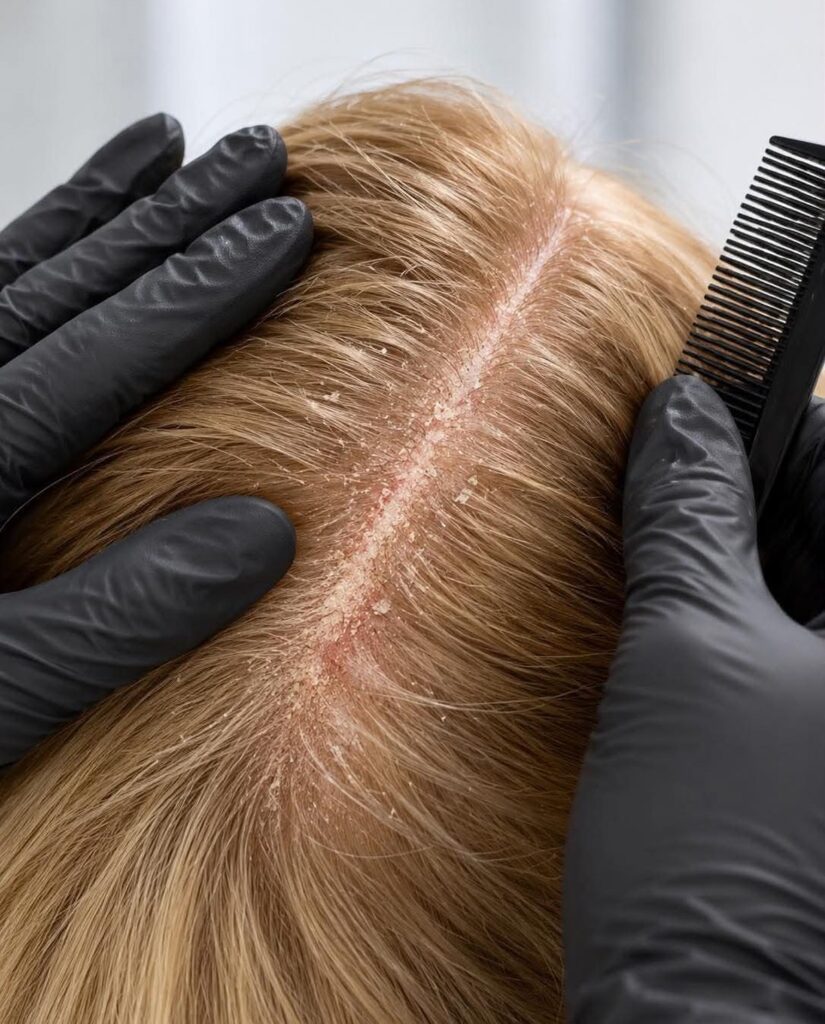
A widening parting
More scalp visible along the centre line.
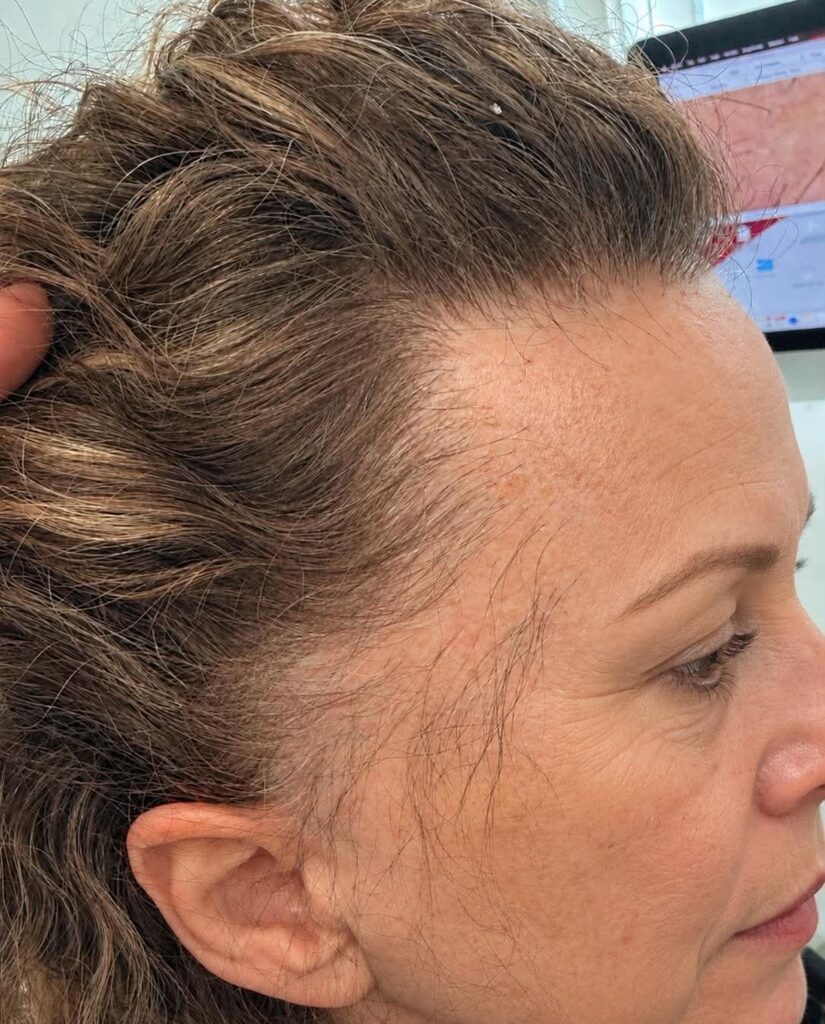
Thinning at the crown
Or around the temples and hairline.
A thinner ponytail
Less volume and density than before.
Patches of hair loss
Small, smooth areas appearing suddenly.
Hair that breaks easily
Short broken lengths or hair that won't grow.
Common causes
What causes female hair loss?
Hair loss in women often has more than one cause at once. Identifying each of them is the key to an effective plan.
Female pattern hair loss
A gradual, often hereditary thinning over the top of the scalp, influenced by hormones. Early assessment helps protect the density you have.
Telogen effluvium
Sudden, heavy shedding a few months after illness, stress, surgery, crash dieting or childbirth. It’s often temporary once the trigger is addressed.
Hormonal changes
Menopause, PCOS, changes in contraception and the months after pregnancy can all affect the hair growth cycle.
Nutrition & deficiencies
Low iron stores, low vitamin D and restrictive diets are common contributors that we always look out for.
Thyroid & general health
An under- or overactive thyroid and some medications can cause thinning. Where appropriate, we’ll suggest tests via your GP.
Traction & breakage
Tight styles, extensions and heat or chemical damage can break the hair or put strain on the follicles.
Alopecia areata
Patchy hair loss involving the immune system. We assess, support and refer where medical treatment is needed.
How we help
A plan built around you
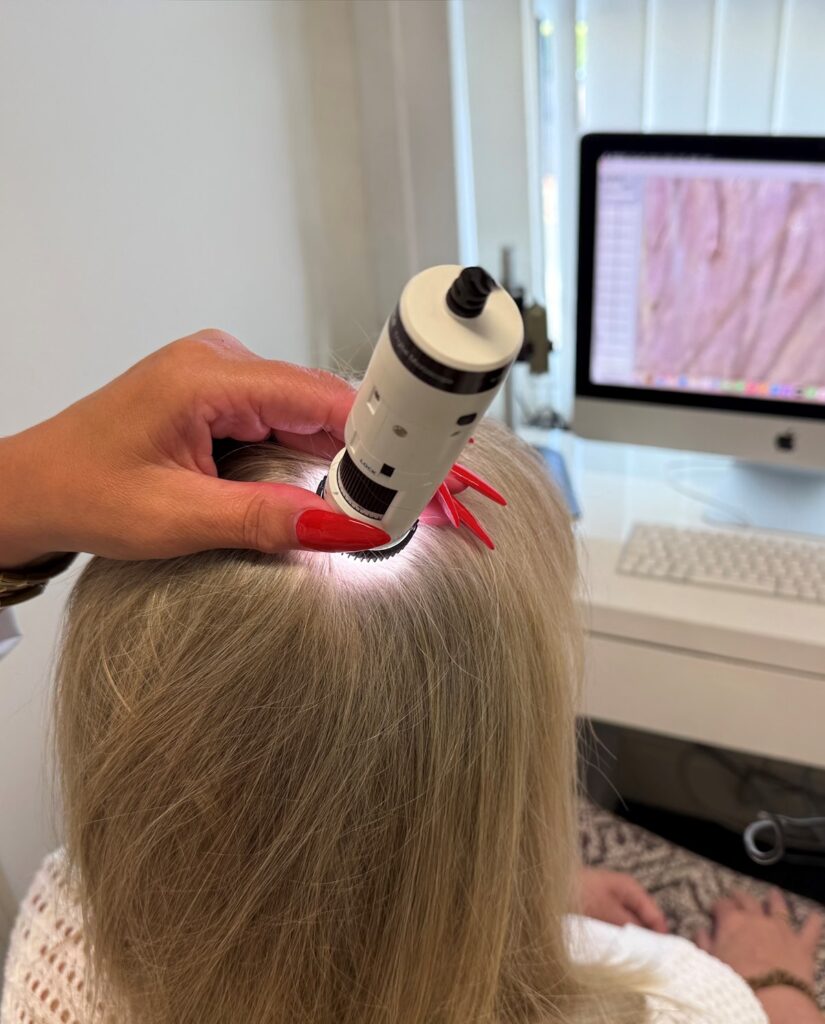
Your consultation looks at the whole picture — your hair history, health, hormones, diet and stress — alongside magnified analysis of your scalp. From there we build a plan that’s specific to you, and we review it with comparison images so you can see what’s changing.
Very. Many women experience thinning or shedding at some point in their lives — particularly after childbirth, around menopause or during periods of stress. You’re not alone, and it’s worth getting it assessed.
Could it be my hormones?
Hormones often play a role, especially around pregnancy, menopause or with conditions such as PCOS. We’ll look at your history and may suggest tests via your GP.
Will my hair grow back?
It depends on the cause. Shedding triggered by stress or illness often settles once the trigger is addressed; with pattern hair loss, the aim is to slow change and support the hair you have. We’ll always give you an honest assessment.
How long before I see a difference?
Hair grows around a centimetre a month, so change takes time. Progress is usually reviewed after a few months and judged over six months or more.